Data sprawl
and shadow AI
Sensitive records spread into cloud buckets, SaaS applications, embedding stores, and third-party AI tools faster than teams can inventory them.
Usually another DSPM dashboard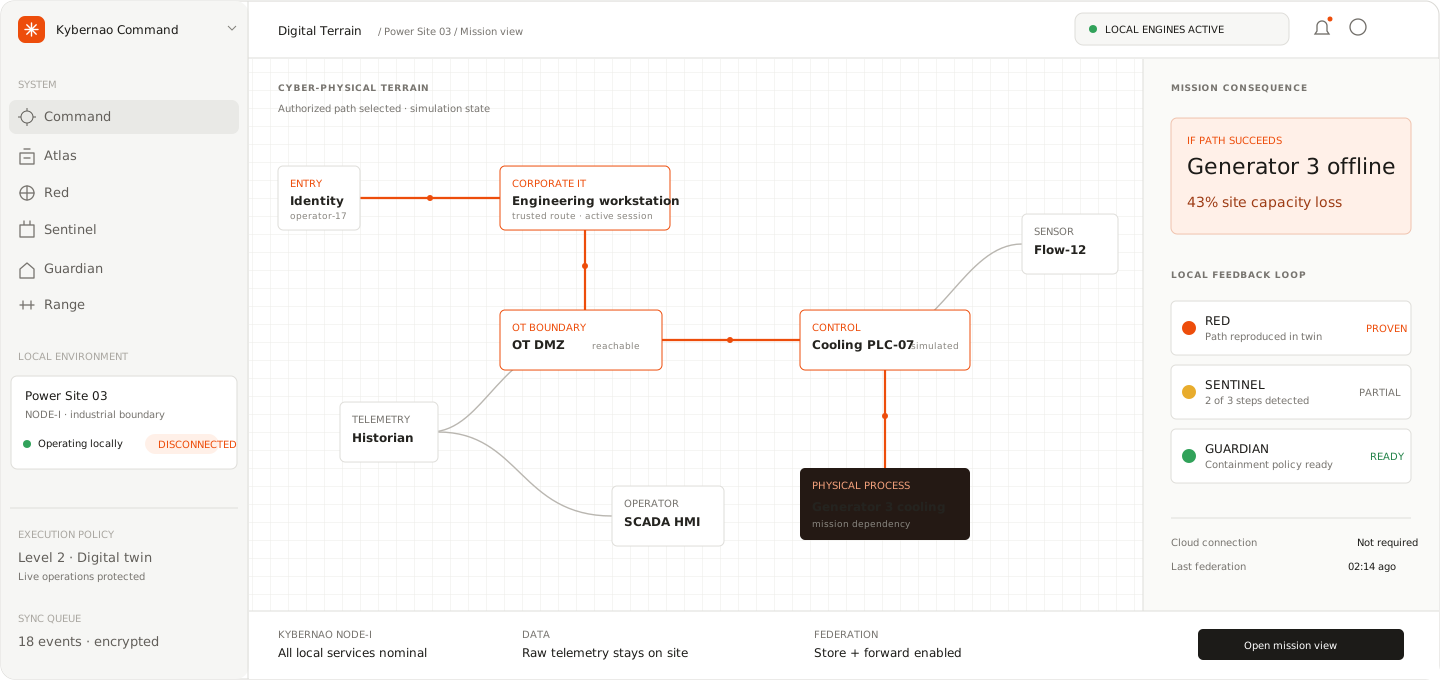
Security teams are drowning in parallel problems every vendor solves in isolation. The correlation work is left to the customer.
Sensitive records spread into cloud buckets, SaaS applications, embedding stores, and third-party AI tools faster than teams can inventory them.
Usually another DSPM dashboardMisconfigurations and over-permissioned identities produce thousands of findings with no ranking an attacker would recognize.
Usually another CSPM dashboardA severity score cannot tell you whether a weakness is reachable, chainable, and impactful in your environment.
Usually another pentest reportOne platform · One schema
Assets, identities, data classifications, posture findings, exploit paths, and agent evidence all live in one model. The queue is ordered by what was proven—not by what scored highest.
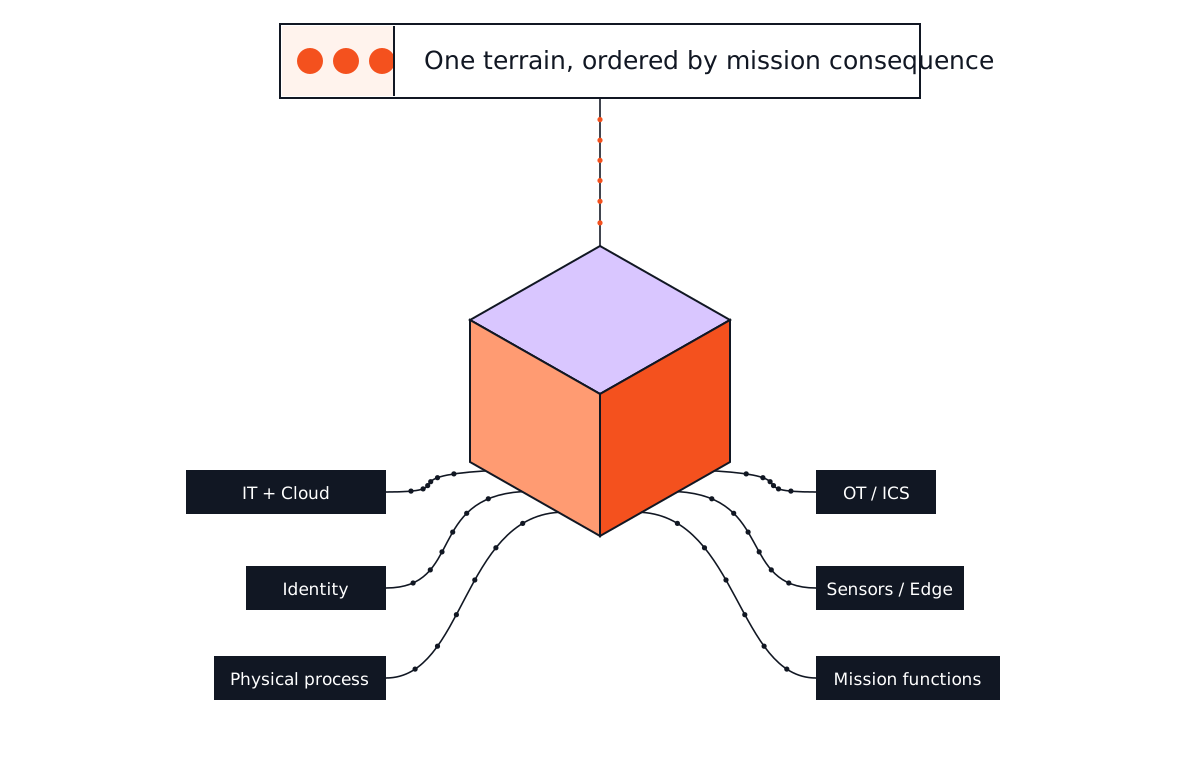
Object-level classification for PII, PCI, PHI, secrets, and intellectual property.
Cloud and identity findings inherit the sensitivity of the data behind them.
Scoped agents return the actual chain they walked—not another hypothetical score.
Every discovery, decision, and agent action is recorded against the control.
Each stage writes into the same graph the next stage reads from.
Discover & classify
Scan structured and unstructured sources across cloud stores, SaaS, and embedding databases. Attach classifications directly to the assets and identities that can reach them.
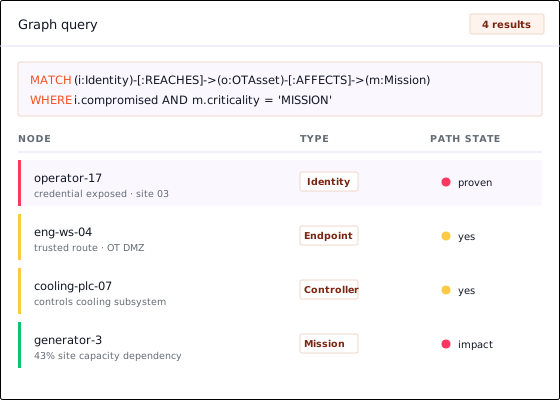
Govern access
Model human and machine identities as relationships. Trace how one entitlement confers access to another resource, then preserve the evidence for review.
Validate exploitability
An orchestrator delegates to researcher, developer, and executor roles. They read the graph, operate inside scoped sandboxes, and write the proven path back for automatic re-ranking.
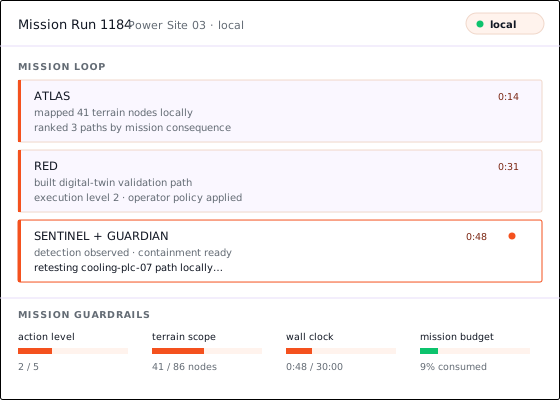
Autonomy needs boundaries
Offensive agents are useful because they can act. Kybernao surrounds that capability with controls enforced outside the model loop.
Authorized targets are enforced at execution and network egress—not merely requested in a prompt.
Generated code runs inside isolated containers with restrictive network policy.
Tool calls, token spend, wall-clock time, and cost are enforced by an external monitor.
Actions that write, modify state, or could disrupt a service pause for named human approval.
Every prompt, tool call, artifact, and result is retained in order for review.
Credentials are scoped per run, expire with it, and carry only the required entitlements.
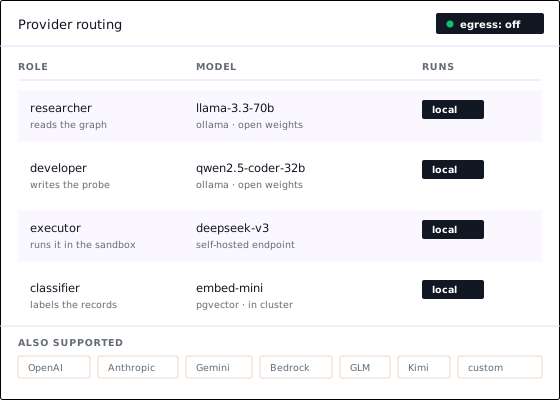
Route different agent roles to hosted or open-weight models. Control cost per flow and keep regulated workloads inside your own perimeter.
Deployment without compromise
Fastest path to value, with the control plane operated for your team.
The full platform runs in your infrastructure while you choose the model endpoints.
No outbound connectivity. Open-weight inference and evidence stay inside the boundary.
Design partner program
Work directly with the team shaping Kybernao. Bring one real environment, compare the risk graph against your current queue, and help define the platform.
Become a design partnerNo. It connects data classification, posture, identity relationships, and offensive proof in one graph so the output is a prioritized path—not another isolated finding list.
Yes. Self-hosted deployments can serve open-weight models locally with no outbound connectivity. Threat intelligence and updates arrive through controlled bundles.
Targets are enforced at the execution and egress layers. External monitors impose hard ceilings, and state-changing actions require explicit human approval.
No. Kybernao is designed to ingest the tools and telemetry you already run, connect their context, and write validated evidence back into your workflow.
See it against your environment
Start with what an attacker can actually reach.
Book a working session